
Parking Lot Paving in Lincoln, Nebraska
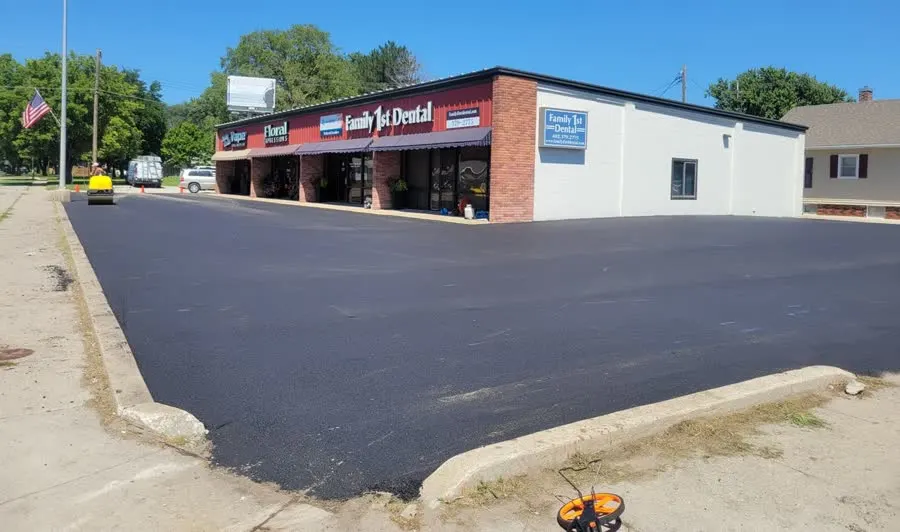
Parking lot paving in Lincoln, NE comes down to two jobs: preparing the surface and base, then placing and compacting new asphalt. How much of the first job you need depends on the shape of your existing pavement. Our parking lot paving work follows that order, and knowing the stages helps you compare bids and plan around your tenants and customers.
What commercial parking lot paving involves
Paving is not just laying a new black layer. The base is the compacted stone and soil under the asphalt, and it carries the load. If the base is sound, new asphalt can often go over a prepared surface. If the base is soft or wet, new asphalt over it will fail early no matter how well it is placed.
That is why the condition of your existing lot sets the scope. A lot with surface wear and shallow cracking may need milling (grinding off the top layer) and a new surface course. A lot with alligator cracking (a web of interlocking cracks), sunken areas or standing water usually points to base trouble underneath, and those areas need deeper repair first.
Preparing the surface versus placing new asphalt
Preparation is the part you do not see once the job is done, and it is where most of the quality comes from. Placement is the visible part: hot asphalt goes down, gets leveled and gets rolled. Ask any contractor to separate these two in the proposal so you can see what you are paying for in each.
How the paving work typically proceeds
Every lot is different, but the sequence is usually the same. The table below shows the main stages and what each one is for.
| Stage | What happens | Why it matters |
|---|---|---|
| Site setup | Mark the work area, plan traffic flow, protect drains and structures | Keeps the site safe and the lot partly usable |
| Surface removal or cleaning | Mill or strip failed asphalt, or clean and prep sound pavement | New asphalt needs a clean, stable surface to bond to |
| Base repair | Dig out soft spots, replace with stone, regrade for drainage | Fixes the cause of failure, not just the symptom |
| Asphalt placement | Spread hot asphalt with a paver in one or more layers | Builds a uniform, correctly sloped surface |
| Compaction | Roll the asphalt while it is still hot | Density gives strength and keeps water out |
Placing and compacting the asphalt
Asphalt is made of stone and sand held together by binder, the sticky petroleum cement that glues the mix. On thicker builds, the lower layer is often called the binder course. It is a coarser, structural layer, and the surface course goes on top for a smooth, tighter finish.
Compaction has to happen while the mix is still hot and workable. Rollers press the layer down to the density the mix needs. Under-compacted asphalt holds air voids, lets water in and tends to ravel or crack sooner, so ask how the crew checks that rolling is done properly.
What Nebraska weather means for paving
Nebraska winters often bring snow and repeated freeze-thaw cycles. Water gets into cracks, freezes, expands and pries the pavement apart, which is why drainage and a solid base matter so much on a Lincoln lot. A lot that holds water in April or after a heavy summer storm is telling you something about its grading.
Paving also needs workable temperatures, and November and December can narrow that window quickly. Many asphalt plants slow down or close for winter, and cold mix cools too fast to compact well. If you are thinking about a late-year project, confirm timing with the crew early, including when the surface can reopen to traffic and whether the job should wait for warmer weather.
What to confirm before requesting an estimate
Walk the lot first and write down which areas actually need work. Note where water sits, where the pavement is cracked or sunken, and where delivery trucks or heavy vehicles turn. A lot that sees daily truck traffic needs a different build than one used only by passenger cars.
Then ask each contractor the same questions:
- Does the scope include base repair, and how will soft areas be handled?
- How many layers of asphalt will go down, and over what area?
- How will the lot stay usable during work, in phases or all at once?
- When can customers and delivery trucks drive on the finished surface?
- How will drainage and slope be handled?
Larger or multi-tenant properties may fit under our commercial asphalt paving work. We also serve property owners in Gretna, and the same stages apply there.
If you want a clear scope for your lot, ask us for a free estimate. We will look at the pavement, talk through how the lot is used and put the stages in writing.
Common questions
How long before I can drive on new asphalt?
Often within a day or so once the asphalt has cooled and firmed up, but it depends on thickness and weather. Ask your crew about heavy trucks, which usually wait longer than cars.
Can my existing parking lot be paved over?
Sometimes. If the base is sound and the damage is mostly on the surface, a new layer over a prepared surface can work. Soft spots and widespread alligator cracking usually need base repair first.
Is November too late for commercial parking lot paving in Nebraska?
It can be, depending on that year's temperatures. Cold air and ground make asphalt hard to compact, so confirm timing and fallback plans with the crew before you commit.
Areas we serve
Our services
Have a question about your project? Call (402) 649-5664